


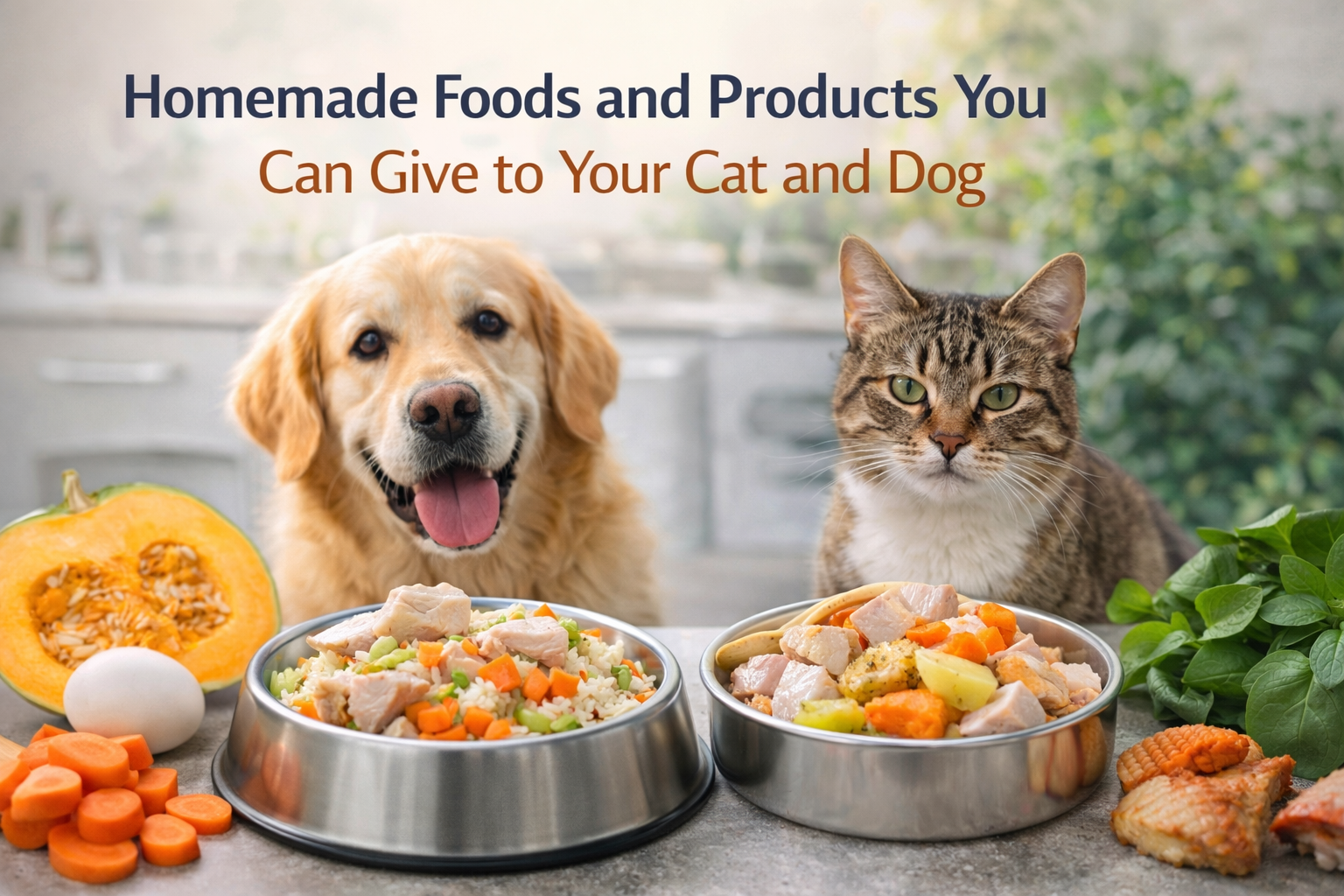

Homemade pet food can be a healthy addition when you choose safe ingredients and keep portions under control. This guide covers simple homemade foods for cats and dogs, pet-safe “home products” you can use, and the foods you should always avoid.
Why homemade pet food can help
Homemade additions can improve appetite, support hydration (especially for cats), and help picky eaters—when used the right way. The goal is to add safe, simple options without creating nutritional imbalance.
Safe homemade foods for dogs (small portions)
These are gentle, commonly tolerated options:
- Boiled chicken (boneless, no spices)
- Boiled egg (plain, small portion)
- Rice + chicken (short-term for sensitive stomach—not a long-term diet)
- Pumpkin (plain cooked, helps digestion)
- Carrots (boiled/steamed)
- Plain yogurt (small amount, only if tolerated)
Tip: Always serve foods plain—no salt, masala, oils, onions, or garlic.
Safe homemade foods for cats (small portions)
Cats need more animal protein, so keep it simple:
- Boiled chicken or turkey (boneless, unseasoned)
- Cooked fish occasionally (boneless, no spices, not daily)
- Boiled egg (small amount)
- Wet food + warm water (best for hydration and appetite)
Important: Cats have specific nutrient needs. If you want a full homemade diet, talk to a vet so it stays balanced.
Easy homemade toppers and treats (quick ideas)
Use these as meal toppers or small treats:
- Shredded boiled chicken (cat/dog)
- A spoon of plain pumpkin (dog)
- Soft boiled carrot pieces (dog)
- Warm water mixed into meals (cat/dog)
Start small and monitor digestion for 24–48 hours.
Pet-safe “home products” you can use
These are simple and safe for daily care:
- Paw wipe: soft cloth + clean water after walks
- Warm towel comfort: for nervous pets after bath (keep it dry and warm)
- Basic brushing routine: reduces shedding and hairballs (especially cats)
Avoid applying random creams, essential oils, or human skincare products to pets.
Foods you must avoid (very important)
Never give:
- Onion, garlic, chives
- Chocolate
- Grapes/raisins
- Xylitol (often in sugar-free items)
- Spicy, salty, fried foods
- Cooked bones (splinter risk)
If your pet eats something unsafe, contact your vet immediately.
Portion and frequency (simple rule)
Homemade items should usually be a small add-on, not the full meal.
- Treats/toppers: 10–15% of daily food max
- Start with small portions and increase only if digestion remains normal
When you should consult a vet
Book a visit if your pet has:
- Allergies (itching, ear issues, skin redness)
- Vomiting/diarrhea after new foods
- Kidney/liver issues
- Weight gain or weight loss
- A plan to switch to fully homemade meals
A vet can guide you on a safe, balanced diet based on age, weight, and health.
FAQs
Is homemade pet food better than packaged food?
Not always. Quality packaged diets are balanced. Homemade food works best as a safe add-on unless a vet plans a complete homemade diet.
Can I feed my pet homemade food daily?
You can offer safe toppers daily, but a fully homemade diet should be vet-guided to avoid nutrient deficiencies.
What’s the safest homemade option for picky eaters?
Plain boiled chicken (boneless, unseasoned) is usually a safe starting point for both cats and dogs.