




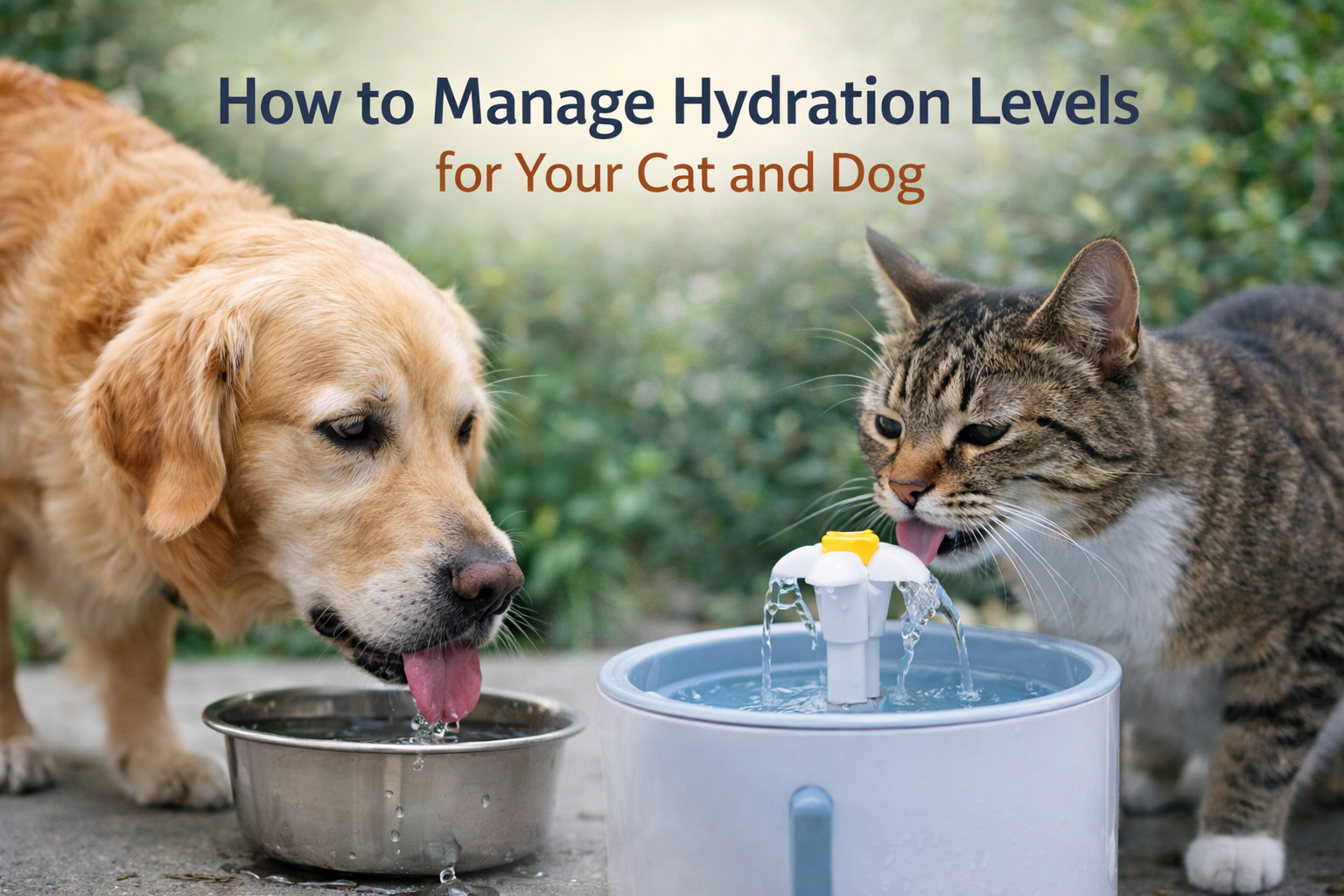

Pet hydration is one of the simplest ways to support healthy digestion, kidney function, energy levels, and temperature control. Cats often drink less than they should, and dogs can lose water quickly through heat, activity, or illness—so hydration needs daily attention.
Pet hydration — How much water does a pet need?
A general guideline is that most pets need fresh water daily in proportion to their body size, activity level, and diet. Pets eating dry food usually need more water than pets eating wet food. If you’re unsure, monitor drinking habits and urination, and ask your vet for a weight-based recommendation.
Signs of dehydration in pets
Watch for these common symptoms:
- Dry or sticky gums
- Low energy / weakness
- Reduced appetite
- Sunken-looking eyes
- Panting (especially in heat)
- Dark urine or urinating less often
If your pet is vomiting, has diarrhea, or refuses water, dehydration can become serious quickly.
How to increase water intake in dogs
Try these simple routines:
- Keep clean water bowls in 2–3 places at home
- Offer small water breaks after play and walks
- Add a little water to kibble (if your dog accepts it)
- Use pet-safe broth occasionally (no onion/garlic, low salt)
- Carry water outdoors and offer small sips regularly
How to get a cat to drink more water
Cats are naturally low drinkers, so make water more appealing:
- Use a pet water fountain (many cats prefer moving water)
- Offer wet food, or add a little warm water to meals
- Place bowls away from the litter box and feeding area
- Use wide ceramic/steel bowls (some cats dislike narrow bowls)
- Refresh water daily and wash bowls often
Pet hydration tips in hot weather
During hot months:
- Keep pets indoors during peak heat hours
- Provide shade and ventilation
- Refill water more often
- Avoid long walks in midday sun
- Watch for heavy panting, drooling, weakness, or confusion
If your pet seems overheated or very tired, treat it as urgent.
When to visit a vet
Book a vet visit if your pet:
- Can’t keep water down
- Has repeated vomiting/diarrhea
- Is urinating much less than usual
- Looks weak, disoriented, or collapses
- Refuses water for several hours (especially in heat)
Early support can prevent dehydration from becoming a serious emergency.
FAQs
Is wet food good for pet hydration?
Yes. Wet food increases water intake and is especially helpful for cats that drink less.
Can I flavor water to make my pet drink more?
Only use pet-safe options like a small amount of plain broth with no onion/garlic and low salt.
What’s the fastest way to improve pet hydration at home?
Offer fresh water in multiple spots, add water to meals, and monitor urination. If symptoms persist, see a vet.